
.png)


The Perfect 7-Day Itinerary for Tokyo, Japan: Top Attractions, Hidden Gems & Travel Tips
Tokyo’s experience isn’t something we can explain in just a few words. The city is huge and busy, and there’s so much to see and do.
On the other side, you can find world-famous attractions and shopping districts, and quiet temples, traditional neighborhoods, and beautiful parks. The city has a mix of old and new - Shrines, temples, Anime culture, neon lights, skyscrapers, food, shopping districts, and tech culture.

Tokyo has a long history; it used to be known as Edo in the 1600s. In 1868, Edo was renamed Tokyo and became the capital of Japan.
Even after spending several days there, we felt like there was still so much more to discover.
How to get to Tokyo: Flights, airports & transportation
Tokyo is well connected to the rest of the world, with two major international airports: Haneda Airport (HND) and Narita International Airport (NRT).
You should check the flights available from your departure city and see which airport offers the best connection for you.

As we were traveling from Munich, we had a direct flight to Haneda Airport.
Haneda Airport is closer to central Tokyo, and you can reach the city quite quickly by Uber or public transport.
You can take the Tokyo Monorail or Keikyu Line to reach central Tokyo. Taxis and Uber are often more expensive but can be more convenient, especially if you have heavy luggage. For first-time visitors, taking the train or metro can also feel a little confusing at first.

You can also book an Airport Limousine Bus if you have large luggage and want to travel directly to certain hotels.
If you are planning to use public transport, you should also check what time you will arrive. If you arrive late at night, you may need to take an Uber or taxi to your hotel or Airbnb, as some public transport services may not be operating.
In our case, we booked an Uber. Just keep in mind that the Uber pick-up point is around a 10-minute walk from the airport exit, but it is an easy walk inside the airport.

You just need to follow the signs. It took us around 30 minutes to reach our hotel, and the Uber was quite convenient and affordable considering we were travelling with heavy luggage. We paid around €55.
Narita International Airport is located farther from central Tokyo, but it also has frequent public transportation connections to the city.

You can take the Narita Express (N'EX), which takes you to major stations in Tokyo, including Shinjuku and Shibuya. You can also take the Keisei Skyliner or an airport bus.

The journey can take around 1–2 hours by public transport, depending on your destination and the connection you choose. An Uber or taxi can be faster, but it is, of course, a much more expensive option.
Where to Stay in Tokyo:
As Tokyo is huge, where you stay in Tokyo can really change your entire experience, as each neighborhood is very different.
Tokyo has excellent public transportation, so when deciding where to stay, make sure your hotel is within walking distance of a metro station. This way, you will be able to reach your destinations quite quickly.

It’s also important to check which metro station is closest to your hotel. I would suggest checking hotels located near the Yamanote Line, as it connects many of Tokyo’s major areas.
For first-time visitors, we would suggest choosing between Shinjuku and Shibuya, as they are some of the main tourist centers, with plenty of restaurants, shopping, entertainment, and excellent transport connections.
Be aware that these areas can be expensive, and you will often find hotels with pretty small rooms. Make sure to check that your hotel is correctly shown on Google Maps and that it is not located too close to the red-light district in Shinjuku. Also, check the reviews carefully, as some hotels can be a bit questionable.
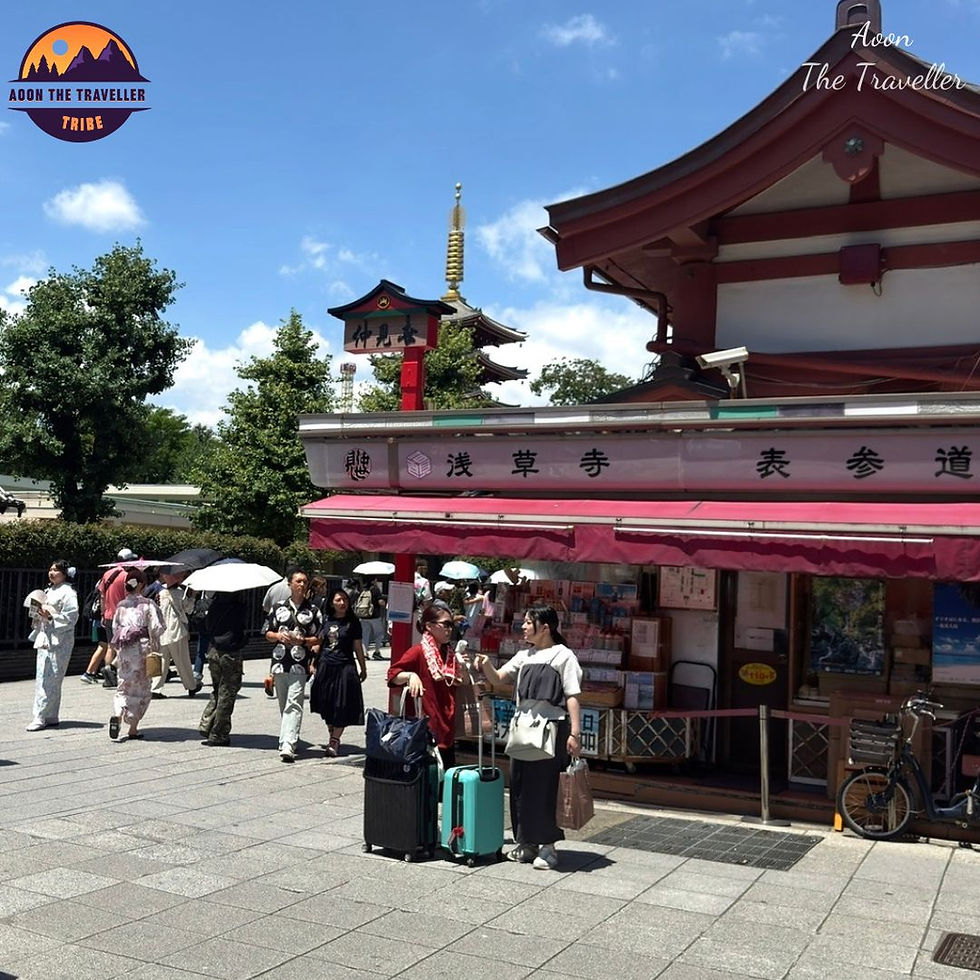
If you want to stay in a more traditional district of Tokyo, you can consider staying in Asakusa, which is also more affordable.
Ueno is another good area, with museums and the popular Ameyoko shopping street. It’s a lively district and offers convenient transportation connections.
If you prefer a more upscale experience, you can also stay in Ginza, where you’ll find luxury hotels and high-end shopping.

Tokyo Station and Marunouchi also offer excellent transportation connections, and this area is also a nice place to stay.
Ebisu is another lovely neighborhood that is often overlooked by tourists. We chose to stay there, close to Ebisu Station, which was about a 10-minute walk from our hotel.

We stayed at The Westin Tokyo. The hotel is quite luxurious and is just one station away from Shibuya. We had an amazing experience, with great hospitality and a rooftop bar.
One of the things I loved about hotels in Japan is that they often provide complimentary cosmetics and amenities, such as moisturizer and sleeping kits.

How many days do you need in Tokyo?
When I say Tokyo is huge, believe me, it’s HUGE! There is so much to do in each neighborhood that you can easily spend an entire day exploring just one area. If you are visiting for the first time,
I highly suggest spending at least a week in the city so you have enough time to explore different neighborhoods and really experience the city and its culture.

If you are short on time, you can also spend 4–5 days in Tokyo, but you will need to skip quite a few things and focus only on the main activities and attractions.
In our case, we spent over 12 days in Tokyo, including 3 days at Tokyo Disneyland and day trips to Kamakura, Mount Fuji, and Yokohama.

If you only want to explore Tokyo itself, I would say 7 days is a good amount of time. I would also recommend that you don’t try to squeeze everything into your itinerary.
Avoid zigzagging from one district to another and then coming back to the same district later in the day for another activity. Try to group your activities by neighbourhood so you can explore each area properly without wasting time travelling back and forth.

Is Tokyo cheap to visit?
That’s a difficult question to answer because you can make your trip to Tokyo as budget-friendly or as expensive as you want, depending on your travel style and what you can afford.

A few activities, such as observation decks like Shibuya Sky and Tokyo Skytree, are generally priced similarly to what you would pay in Western Europe. When it comes to transportation, however, public transport is quite affordable. We were usually paying around €1–2 per ride.
Uber, on the other hand, was quite expensive. Even for very short distances, we were paying around €10–15. Hotel prices also depend heavily on where you stay and what type of hotel you choose.

We spent around €10–20 per meal per person. Keep in mind that we don't drink alcohol, so this may be a little lower than what you might spend if you do.
We did lots of activities and mainly used the metro, except for a few Uber rides, including our trips to and from the airport and to and from Disneyland. Here’s our approximate breakdown per person:

Hotel: We stayed for 12 days — 9 days at The Westin Tokyo in Ebisu, which is a 5-star hotel, and 3 days at Tokyo Disney Resort. We paid around €1,400 per person (€2,800 in total). Of course, you can find much more budget-friendly accommodation in Tokyo.
Activities, transportation, Uber & food: Around €1,300 per person, excluding shopping and flights. However, you can easily adjust your activities and spending depending on your budget and preferences.
Average daily spending: We spent around €225 per person per day, excluding shopping and international flights. This was our budget, but you can definitely spend less or more depending on your travel style.
One thing I would like to warn you about is shopping. Sometimes, you find things that are surprisingly affordable in Japan. That was definitely the case for me with Uniqlo and Japanese beauty products, and I ended up buying so much that I spent quite a lot of money in the end.

Overall, I wouldn't say Tokyo is a cheap destination, but it can definitely be affordable. You can spend a lot if you want luxury hotels, fine dining, shopping, and taxis, but you can also have an amazing experience without spending a fortune.
Best way to commute within Tokyo:
Public transportation:
Undoubtedly, Tokyo has one of the best public transportation systems in the world. It has an extensive network of trains, subways, and buses that connect different parts of the city, including all the major tourist spots.

Public transportation is fast, clean, affordable, safe, and punctual, but it can get crowded. In some European countries, you can buy a day ticket and travel unlimited within the city for the entire day. However, this type of ticket isn’t generally available in Tokyo, so you pay based on how much you travel.
For first-time travelers, Tokyo’s public transportation system might seem a bit intimidating, with so many different routes, stations, and platforms. But we found it quite easy to use once we got the hang of it.
We’d like to share some tips on how you can use Tokyo’s public transportation effectively too.
Many travelers get confused about whether they need a Suica card or a JR Pass, but they serve different purposes.
Suica: Your everyday travel card. Use it for local trains, subways, buses, and even convenience stores. For most travelers, having a Suica or another IC card is highly recommended.

JR Pass: A pass for longer-distance JR train travel, including many Shinkansen routes. You don’t necessarily need one. It’s mainly worth considering if you’re planning several long-distance train journeys.
For travelling within Tokyo, first add a Suica or PASMO card to your phone wallet. You can easily add credit to your Suica card directly through your wallet. You simply pay for what you use.
For most journeys, you’ll tap your Suica card at the ticket gate when entering the station, and tap again when you exit. The fare is then automatically deducted from your balance. Make sure you tap when you exit as well, otherwise your journey may not be completed correctly.
If you change lines, for example from the Yamanote Line to the Asakusa Line, you may need to follow the signs and tap your card again if you are passing through a separate ticket gate for the new line. This depends on the station and the connection, so just follow the signs.
I would highly recommend checking your connection on Google Maps. It tells you the exact route, which platform to use, the train line name, and the direction you need to take.
It can even show you which section of the train to board so you can get off closer to the exit you need. If you’re changing trains, Google Maps also shows you which signs to follow for your next connection. Some train stations are huge, so it can be very easy to get confused. Google Maps is really your best friend when traveling around Tokyo.

When you’re on the platform, queue up just like the locals do. There are also designated priority seats for elderly people, pregnant women and people with disabilities, so make sure you leave these seats available for those who need them.
We had heard that you’re required to stay completely quiet on the subway, but we did see people talking. Still, I would recommend keeping your voice down and respecting the local culture.
When we were in Tokyo in July, it was extremely hot outside, but thankfully, the air conditioning in the trains and subway stations was great.
Lastly, be prepared to walk a lot. Even with Tokyo’s excellent public transportation, you’ll often have to walk quite a bit to get to and from stations, especially in large stations.

Shared Taxi:
We did take some taxis during our trip, but they are generally quite expensive. Despite the city being huge, we found that the traffic wasn’t too bad. Most of the time, we didn’t experience much traffic on the roads, and the city’s infrastructure is quite good.

You can download local apps similar to Uber, such as DiDi and GO Taxi. In our case, we used Uber. I also compared the prices of Uber and DiDi and, surprisingly, found that the fares were almost the same. Since we’re already very familiar with Uber, we simply used Uber whenever we needed a taxi.
Do you need a car in Tokyo:
No. You really don't need a car to explore Tokyo. Public transportation is usually faster and more convenient, especially in busy areas where traffic can be heavy.
Most importantly, stay near a train or subway station, so you can reduce the commuting cost.

Best time to visit Tokyo: Weather & travel Seasons:
Tokyo is one of the cities you can visit year-round, and each season has something different to offer.
March – May: Spring
This is one of the most popular times to visit Tokyo because it’s cherry blossom season. You can find many beautiful spots where you can get those iconic cherry blossom pictures, and the weather is also pleasant.
But keep in mind that it can get very crowded, and hotels can be quite expensive during this period.
June – August: Summer
Summer is quite hot and humid, and it also rains quite often. As we visited in July, the temperature went up to around 38°C. Despite the heat, we still had an amazing trip.
September – November: Autumn
Autumn is also one of the best times to visit Tokyo. The weather is pleasant, and you can see beautiful autumn colors around the city.

December – February: Winter
Winter is quite cold, especially in January and February. But the best part is that the city is a bit less crowded, so you can explore Tokyo at a more relaxed pace.
Is Tokyo safe for Tourists?
Tokyo is very safe, as Japan has a relatively low crime rate. But still, you need to be careful:
Be aware of pick-pocketing and keep your belongings close to you.
At night, be a little more careful, as you may get targeted by street touts who try to take you to bars or clubs, where you may end up with very high bills.
Be respectful of the local laws and social rules. Being loud on trains, cutting queues, littering or ignoring traffic rules can cause unnecessary problems.
Japan is an earthquake-prone country, so be prepared in case anything happens. If an earthquake occurs, stay calm and follow the staff's instructions.

Things to do in Tokyo
Day 1:
Meiji Shrine → Takeshita Street → Omotesandō
1. Meiji Shrine:
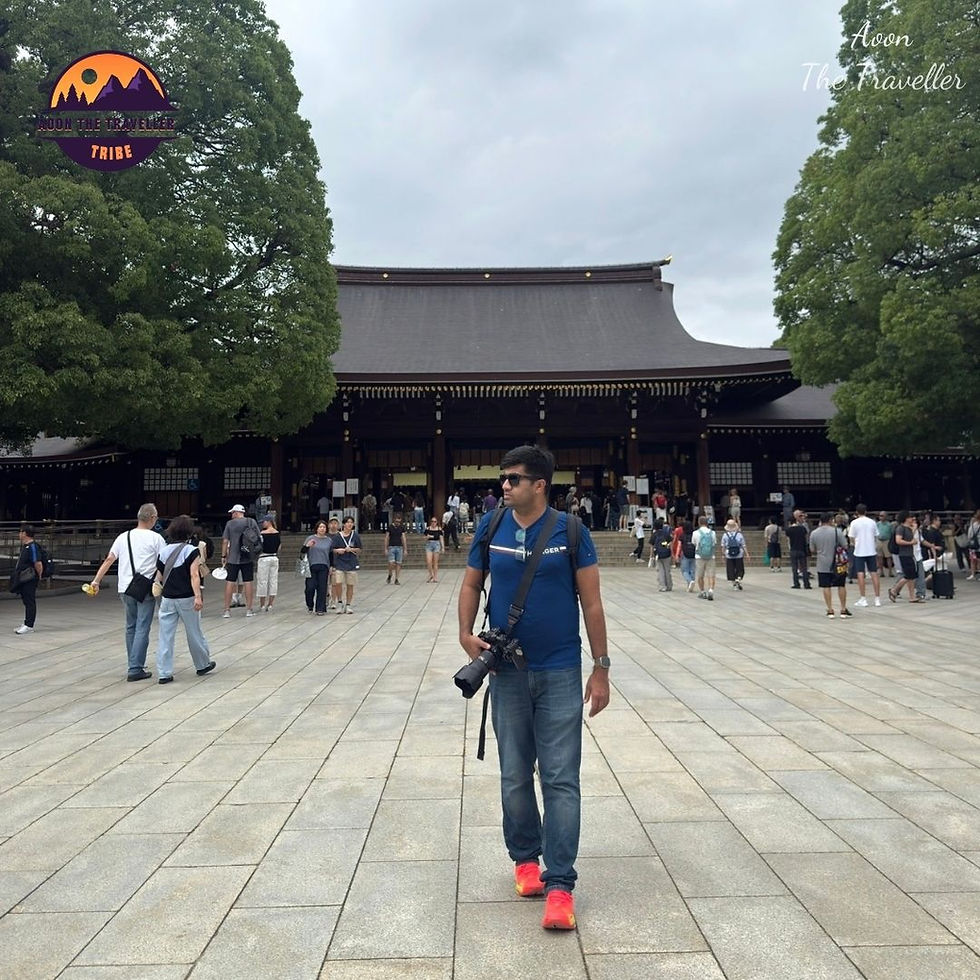
You can start your day at Meiji Shrine early in the morning. We get off at Yoyogi Park and explore the streets.
Then we headed towards Meiji Shrine, which is hardly a 5-minute walk. The shrine is a famous Shinto shrine, and it’s dedicated to Emperor Meiji and Empress Shōken. They played a major role in the modernization of Japan in the 19th century.

The Shrine is surrounded by forest with over 100,000 trees. You can enter from giant wooden torii gates and walk in the forest. There is also a cafe and restaurant where you can relax a bit.
We have been there in the summer, so the best time is to visit in the morning; otherwise, it gets very hot. We spent around 1 and a half hours enjoying the surroundings, took some pictures, and experienced the Japanese culture.

Our next stop was Takeshita Street.
2. Takeshita Street:
Takeshita Street is quite close to Meiji Shrine; after visiting the Shrine, we walked towards Takeshita Street. The street is famous as a youth shopping street.
The street is quite narrow with colorful fashion boutiques, snack shops, and arcades. You can also explore the neighboring streets and experience the Harajuku culture.

You can also find famous street food like Japanese crepes, Rainbow cotton candy, Giant cookies, and Bubble tea. There are also animal cafes.
There are also Trendy Japanese fashion and vintage clothing. We took some pictures in front of colorful shops and also explored some shops.
You can easily spend 2 hours exploring the streets, and the best time to visit it at the morning, as it gets very crowded in the afternoon.
3. Omotesandō:
It’s not a lie if I say that Omotesandō is Tokyo's Fifth Avenue or Champs-Élysées of Tokyo. It’s a boulevard with a tree-lined avenue, and it has luxury shopping, modern architecture, and stylish cafés. You can find luxury brands like Louis Vuitton, Dior, Prada, Gucci, Chanel, etc.

You can also find mid-range brands aswell like Nike, Tommy Hilfiger, New Balance, etc. We did some shopping and enjoyed the stylish shops and architecture.
You can also visit Omotesandō Hill, which is a shopping complex with fashion boutiques, cafes, and restaurants.
You can easily spend 1-2 hours exploring and doing some shopping. You can also relax at local Cafes and try out desserts like Matcha sweets, Japanese pastries, and Ice cream.
Day 2:
Shibuya Scramble Crossing → Hachikō Statue → Shibuya Hikarie → MAGNET by SHIBUYA109 → Miyashita Park → Explore Shibuya’s Pop Culture & Shopping→ Shibuya Sky → Shibuya Share Lounge
Shibuya - well, well, It’s one of Tokyo’s most fascinating districts. It is known for neon lights, fashion, and technology. In Shibuya, you can easily spend half to a whole day.
After sunset, Shibuya transforms into a sea of neon signs, music, restaurants, and entertainment venues.
In our case, we spent the whole day in Shibuya, but if you don’t have enough time, you can also spend half day. Find the following plan:
1. Shibuya Scramble Crossing:
The Shibuya Scramble Crossing is just globally famous, and it got even more popular after getting featured in The Fast and the Furious: Tokyo Drift. The movie featured Tokyo’s underground car culture, neo street and drifting scenes inspired by the Japanese car scene.

There are hundreds of thousands of people crossing the Shibuya Scramble Crossing every day, making it one of the busiest and most iconic crossings in the world.
We started our Shibuya adventure by experiencing the famous scramble ourselves. The moment the pedestrian light turns green, the streets transform into a sea of people moving in every direction.

You’ll also spot many influencers waiting for the perfect moment, recording videos, and running into the crossing to capture that iconic Tokyo shot.
2. Hachikō Dog:
You can find the Hachikō Memorial Statue outside of Shibuya Station; it’s a dog statue that became famous for waiting at the station every day for his owner even after his owner had passed away.
3. Shibuya Hikarie:
Shibuya Hikarie is another modern shopping and entertainment complex in the heart of Shibuya. It has shops and restaurants, and we also enjoyed the views over the Shibuya skyline.

4. Magnet:
You can also enjoy an amazing view of Shibuya Scramble Crossing from the rooftop of MAGNET by SHIBUYA109. You need to book this experience in advance.
We booked the rooftop experience, which included drinks and a drone-shot photo. To be honest, I wasn’t very impressed with the view because we paid around €18 per person, and in my opinion, it wasn’t worth the price.
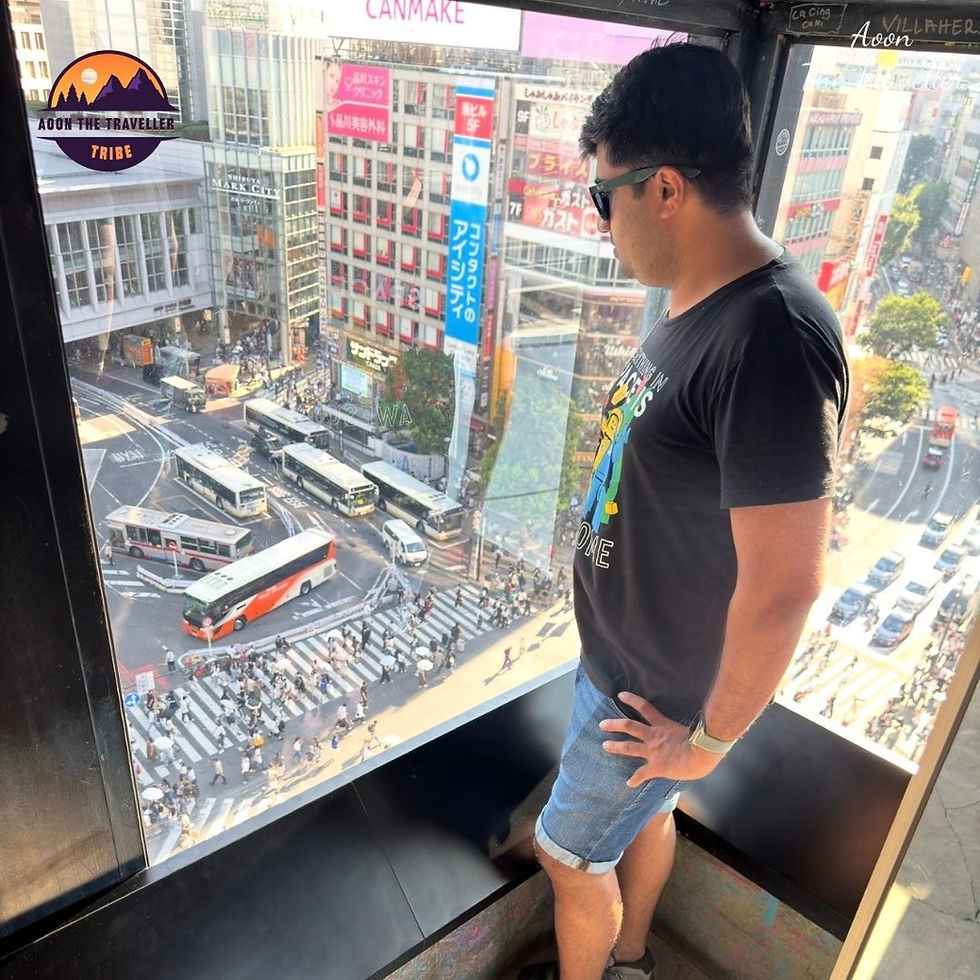
However, I absolutely loved the drone shot experience, which we captured during both daytime and nighttime. It was a unique memory and definitely the highlight of this experience.
Inside MAGNET, you can also find anime and gaming stores. Additionally, at the rooftop, there is another experience where a 3D screen captures you and creates an animated version of yourself.

You then receive a video of your animated character performing a stunt in Shibuya. This experience comes at an additional cost.
5. Miyashita Park:
You can also enjoy Miyashita Park, which is a modern rooftop park with cafés, restaurants, shops, and great views over the city.

6. Explore the pop culture and shopping:
The area around Shibuya Parco is popular for Anime, Arcades, karaoke, and gaming stores. You can find Nintendo, Pokémon, and Japanese pop culture stores.
Moreover, you can also find popular brands like UNIQLO, GU, Don Quijote, and many more, where you can shop for fashion, cosmetics, souvenirs, and everyday items.
7. Shibuya Sky:
Have you seen those videos of an elevator that makes you feel like you’re traveling up into the sky? That’s Shibuya Sky.

I have visited many observation decks in Tokyo, and without a doubt, Shibuya Sky offers one of the best views of the city. Located at the top of Shibuya Scramble Square, it stands 229 meters above Tokyo and offers a breathtaking 360° view of the city.
We visited Shibuya Sky in the late afternoon, around 5 PM. We booked the bar experience, which included drinks, snacks, and a private couch area. I would highly recommend this option if your budget allows. It costs about twice as much as the regular ticket, but you get a comfortable couch for 50 minutes where you can relax, enjoy your drinks, and take in the incredible views.

Another great benefit is priority entrance, meaning you can skip the long queues and enter faster. In my opinion, it is totally worth the extra cost.
You aren’t allowed to take bags or caps to the rooftop, but there are free lockers available where you can store your belongings. The staff will guide you through the process.

After spending 50 minutes in the bar area, we moved to the public rooftop area to enjoy the full 360° views of Tokyo and watch the sunset.
There are several picture-perfect spots on the rooftop, but they can get very crowded, and visitors often queue to take photos. You can also purchase an official photo taken by a professional photographer as a memory of your visit. On a clear day, you can also see Mount Fuji.

Important tip: Sunset and evening tickets sell out very quickly. I highly recommend booking your tickets at least 2 weeks in advance to secure your preferred time slot.
8. Share Lounge Shibuya:
Actually, we got a bit exhausted, so we found SHARE LOUNGE Shibuya Tsutaya, a co-working café that offers unlimited drinks and snacks.
You can enjoy Starbucks coffee, ice cream, nuts, soft drinks, packaged noodles, and much more.

We relaxed there while enjoying the view of the Shibuya Scramble Crossing. If you’re looking for a comfortable place to take a break and recharge in Shibuya, this is definitely a place to consider.
Day 3:
Exploring Asakusa: Sensō-ji → Nakamise Shopping Street → Traditional Rickshaw Ride → Kappabashi Street (Kitchen Town) → Tokyo Skytree → Tokyo Solamachi → Sumida River → Water Bus to Asakusa
We started our day by exploring Asakusa. Asakusa is one of Tokyo’s oldest and most cultural neighborhoods. You can feel like you are transported into the Edo Period.

From religious sites to traditional shops, the district has craftsmen, theaters, and traditional food stalls. The district is also centered around the temple.
You can easily spend an entire day there. We would suggest the following plan to explore Asakusa:
1. Sensō-ji:
You can start your day in Asakusa by visiting Sensō-ji, the oldest Buddhist temple in Tokyo. The temple was founded in 645 AD and is one of the city's most iconic cultural landmarks.

We entered through Kaminarimon (Thunder Gate), the temple’s iconic entrance featuring a giant red lantern, and captured some memorable photos here.
Another highlight is the beautiful Five-Story Pagoda, which stands beside the main hall and adds to the temple’s traditional atmosphere.

The temple gets very crowded during the day, so we recommend visiting before 8:00 AM to enjoy a quieter atmosphere and take photos without the crowds. Alternatively, visit in the evening, when the temple is beautifully illuminated and creates a truly magical atmosphere.
2. Nakamise Shopping Street:
The Nakamise Shopping Street stretches from Kaminarimon Gate to Sensō-ji Temple, and it’s around 250 meters long. This is considered one of Japan's oldest and most famous shopping streets.

You can find different traditional street shops selling authentic Japanese souvenirs, including folding fans, yukata, kimonos, chopsticks, ceramics, lucky charms, and handcrafted items.
You can also enjoy Japanese street food such as Ningyo-yaki, senbei, and freshly made melon pan.

I would highly suggest visiting Shin-Nakamise Street, which is a covered shopping arcade, and you can find Fashion boutiques and shoe stores, Japanese souvenir shops, Cosmetics and accessories, and Cafés and restaurants.
3. Take a Traditional Rickshaw Ride:
Most tourists miss this unique experience, but taking a traditional rickshaw, known as Jinrikisha, is a special way to explore Asakusa. These two-wheeled vehicles are pulled by a trained rickshaw driver, also known as a Shafu.
At first, we were a little skeptical about taking the ride because we wondered whether it was ethical to have someone pull us.

However, we learned that many rickshaw drivers choose this profession, and taking a ride is also a way to support local businesses and preserve this traditional experience in Asakusa.
In the past, visitors to Asakusa also enjoyed exploring the area by rickshaw. Our rickshaw driver was a really cool guy. It was over 35°C, and he was running through the streets while carrying us, showing us hidden corners of Asakusa, and sharing interesting stories about the neighborhood’s history.
We took a 45-minute tour, which cost us around €80. The experience was truly unique, fun, and a memorable way to see Asakusa from a different perspective.

We found our rickshaw just outside the metro station, but you can also find many near Sensō-ji Temple and Kaminarimon Gate. Different routes are available depending on how much time you have.
4. Kappabashi Street (Kitchen Town):
If you want to buy Japanese kitchenware, knives, and ceramics, then we would recommend visiting Kappabashi Street.

5. Tokyo Skytree:
Even though you can enjoy beautiful views of Tokyo Skytree from different parts of Asakusa, we highly recommend visiting the tower itself for a truly unforgettable experience.
For us, it was easy to get tickets through Klook, but we highly recommend booking your tickets in advance to secure your preferred time slot, especially if you are planning to visit on the same day as your Asakusa itinerary.

Tokyo Skytree is located about a 20-minute walk from Sensō-ji Temple, or you can take the metro, which takes only around 7 minutes.
Tokyo Skytree is the tallest tower in Japan, and it opened in 2012 and was originally built as a broadcasting tower. Today, it has become one of Tokyo’s must-visit attractions, offering breathtaking panoramic views of the city.
Visitors can access different observation areas, including the Tembo Deck and Tembo Galleria. On a clear day, you can see famous landmarks such as Tokyo Tower, Tokyo Bay, and even Mount Fuji in the distance.

One of the most unique experiences is walking on the glass floor, where you can look directly down at the city below. The best time to visit is during sunset or at night when Tokyo transforms into a beautiful sea of lights.
You can easily spend 1–2 hours enjoying the views, taking photos, and exploring the tower. We would also suggest checking the weather before visiting Tokyo Skytree, as if Tokyo is hazy, and on cloudy days, visibility from the observation decks may be limited.
6. Tokyo Solamachi:
It’s really suggested to explore Tokyo Solamachi, which is the shopping and entertainment complex at the base of Skytree.
You can find different international and local brands; you can also find some anime stores, Japanese souvenir shops, and restaurants and cafes.
7. Walk along Sumida River:
We would highly suggest walking along the Sumida River and enjoying the view of the Tokyo Skytree, the river, and the traditional-meets-modern skyline.

8. Take a Water Bus from Asakusa:
From Asakusa Pier, you can enjoy the unique experience of the Tokyo Water Bus, which takes you on a scenic cruise while offering beautiful views of Tokyo’s mix of traditional and modern landmarks.
During the ride, you can admire stunning views of Tokyo Skytree, historic bridges, and the Tokyo skyline. Some boats also travel to destinations such as Hinode Pier, Hamarikyu Gardens, and Odaiba.
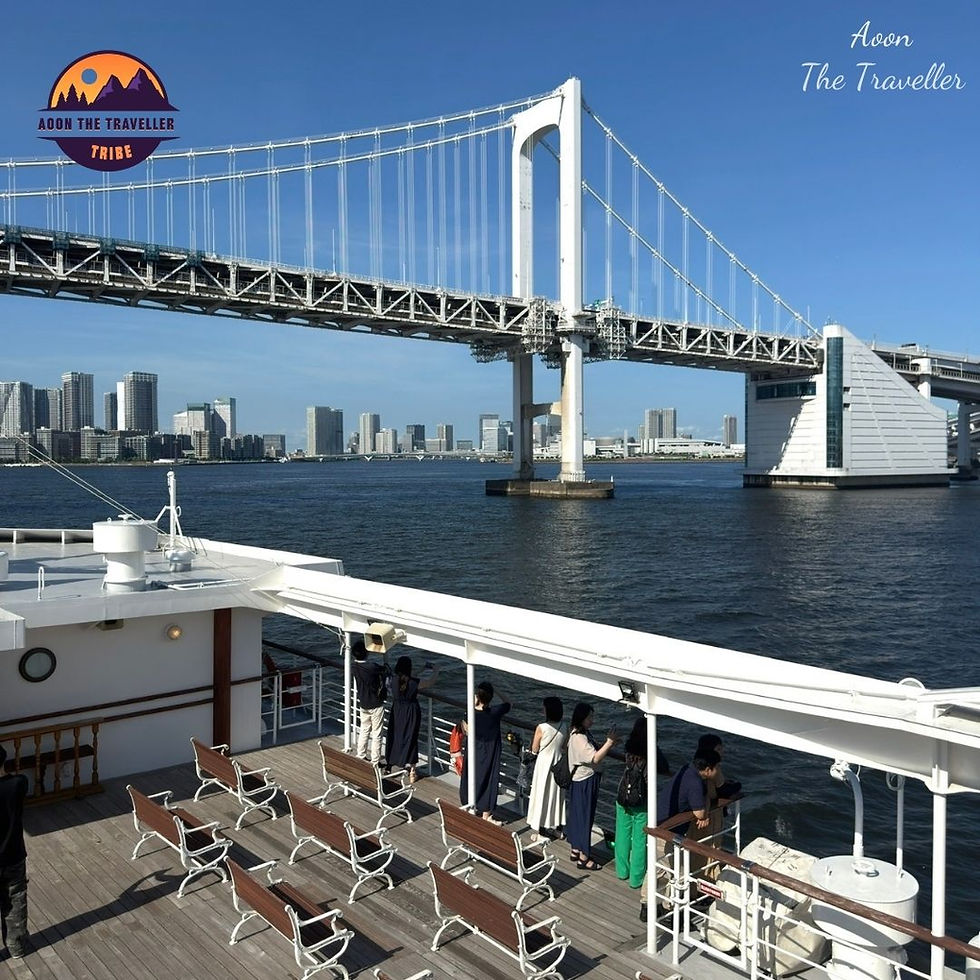
The water bus ride is a great way to relax and rest your feet after exploring Sensō-ji Temple and Asakusa. Make sure to check the schedule in advance, as departures are limited compared to regular trains and buses.
In our case, we experienced a cruise from Hinode Pier, so we didn’t take the water bus from Asakusa. However, if you have enough time, we would definitely recommend adding this experience to your Asakusa itinerary.
Day 4:
Ueno Park → Tokyo Museum District → Ginza (Chuo-dori, Seiko Clock Tower, Ginza Six, Department Stores & Kabukiza Theatre)
You can start your day from Ueno Park and the surrounding area.
1. Walk around Ueno Park:
Ueno Park is quite huge with ponds, temples, shrines, museums, and food streets. If you are there during cherry blossom season, then you should definitely go there.
At the park, you can visit Ueno Tōshō-gū Shrine, which is a gold-covered shrine. You can also enjoy the Shinobazu Pond.
If you are travelling with the kids or enthusiastic about animals, you should definitely visit Ueno Zoo. Be mindful that for the zoo, you need an extra 2-3 hours; if you don't have enough time, I would recommend skipping it. In our case, we missed it.
2. Tokyo Museum District:
i. Tokyo National Museum:
If you want to experience Japanese art, Samurai Artifacts, Buddhist Art, ceramics, and archaeological objects, this is the place to visit.
There are some other museums that you can also visit based on your interests:
National Museum of Nature and Science
Tokyo Metropolitan Art Museum
The National Museum of Western Art
3. Explore Ameyoko Shopping Street:
Ueno Park is just a few minutes' walk from Ameyoko Shopping Street. You can start at Ueno Station and walk towards Okachimachi Station. The market runs under and alongside the JR railway tracks and is around 500 meters long. You can find shops selling clothes, cosmetics, souvenirs, and much more.

These streets are also famous for Japanese street food. You can try takoyaki, yakitori, grilled seafood, sashimi, and seafood bowls. You can also find plenty of Japanese snacks and sweets.

You can also visit Ueno Hirokoji, where you'll find more restaurants, shops, department stores, and small streets to explore.
You can easily spend 5-6 hours in the neighborhood and enjoy the different side of Tokyo, as Ginza is located not so far from here. I would highly suggest combining Ueno and Ginza in one day.

You can start exploring with Ueno in the morning, and then you can take the Metro to Ginza, which is only around 16 minutes.
4. Exploring Ginza:
Ginza is one of the upscale districts of Tokyo and is known for luxury shopping, with high-end brands, department stores, upscale restaurants, cafés, art galleries, and impressive modern architecture. If you want to shop, you can spend an entire day,

but if you want to enjoy the district, you can easily spend 3-4 hours in Ginza. In the evening, you can also enjoy the buildings, signs, department stores, and luxury boutiques as they light up.
i. Chuo-dori:
You can start with Chuo-dori, the main street running through Ginza. Here, you’ll find luxury brands such as Dior, Chanel, Louis Vuitton, and many other international and Japanese brands.

Since UNIQLO and GU are Japanese brands, you should definitely visit the 12-floor UNIQLO building in Ginza. I spent quite a lot of time shopping there!
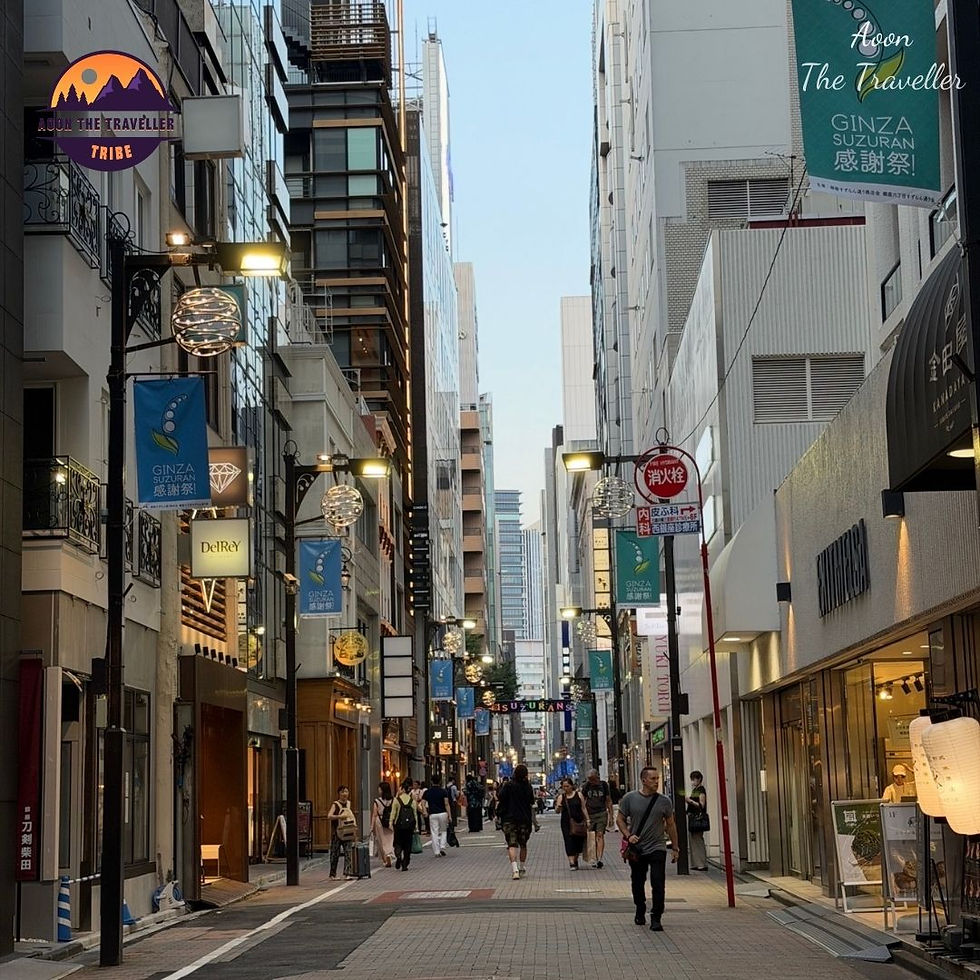
One of the unique services I discovered at GU is that if you have a heavy shopping bag, you can have it delivered directly to your hotel for around €10. They deliver the bag to your hotel the next day, which is very convenient if you don’t want to carry your shopping around Tokyo.
You can also visit Itoya, which is a Japanese stationery store with multiple floors of notebooks, pens, art supplies, cards, gifts, and beautifully designed stationery.
ii. Seiko Clock Tower:
You should definitely enjoy the view of the historic Wako clock tower, which is an intersection of Chuo-dori and Harumi-dori.

iii. Ginza Six:
If you feel a little overwhelmed by Chuo-dori, you can enjoy a quieter side of Ginza at Ginza Six, where you can also find impressive art installations.

Ginza Six is the largest luxury shopping complex in Ginza, with fashion, beauty, restaurants, cafés, and art installations. Even if you don’t want to shop, you can enjoy some window shopping and visit the rooftop garden, where you can relax and enjoy views of the surrounding area.
iv. Department stores:
You can also visit the oldest department stores, such as Matsuya Ginza and Mitsukoshi in Ginza.
v. Kabukiza Theatre:
Kabukiza Theatre is located in Ginza, and it’s famous for its Kabuki performance, which is Japanese dance drama with a combination of singing and dancing with glamorous costumes and make-up. This type of performance originated in the 17th century during the Edo period.

Day 5:
Tsukiji Outer Market → Hamarikyu Gardens → Tokyo Station → Tokyo Character Street → Tokyo Ramen Street → KITTE → Imperial Palace & East Gardens → Akihabara
1. Tsukiji Outer Market:
You can start your day by visiting Tsukiji Outer Market and having breakfast there. It’s one of the best markets in Tokyo for Japanese food and a wholesale seafood market with different vendors selling fresh seafood,

Japanese ingredients, kitchenware, spices, dried seafood, pickles, and snacks. You can explore different stalls and try out the local street food. You can spend around 1 to 1.5 hours here.
2. Hamarikyu Gardens:
Just on the short walk for 15 minutes from Tsukiji, you can reach the entrance of Hamarikyu Gardens.

Hamarikyu Gardens is a traditional Japanese garden, and it’s a nice, relaxing place to escape the hustle and bustle of Tokyo city and relax in nature. The park also has 300-year-old pine trees, and you can also find the pond, bridges, and trees, and also the view of the Tokyo Skyline.
You can see the pond and cross the traditional bridges.
We have also been to the Nakajima-no-Ochaya, which is a traditional tea house located on an island in the garden’s pond.
It’s a traditional cafe where you have to take off your shoes and go inside. You can enjoy matcha and Japanese sweets and enjoy the view.

One of the unique features of Hamarikyu is its Shioiri-no-Ike, a seawater pond connected to Tokyo Bay.
The water level changes with the tide, making it different from the typical ponds you see in Japanese gardens. You can also take a water bus towards Asakusa from the park, but this doesn’t operate every day.

You can easily spend 1.5-2 hours in the Garden.
3. Tokyo Station:
Most of the tourists miss this district of Tokyo. It’s located just 15 minutes away on the Metro ride from Hamarikyu Gardens. The Tokyo Station isn’t anything like an ordinary train station, but it’s just huge. One thing I would recommend: before getting out of the Tokyo Station, discover the station from inside.

i. Explore Tokyo Character Street:
If you are a fan of Japanese characters and anime, you should go to Tokyo Character Street, located inside Tokyo Station, which has different outlets like Hello Kitty, Pokémon Store Tokyo Station, Ghibli-related merchandise, JUMP SHOP, etc.

ii: Explore Daimaru:
Inside Tokyo Station, you can also visit Daimaru, which is a Japanese departmental store with different floors. The highlight of this store is its food floor called Depachika, where you can find beautifully presented Japanese sweets, cakes, pastries, bento boxes, sushi, wagashi, and other regional specialties.

You can walk around and be impressed by different and unique Japanese food and their presentation.
You can also find cosmetics, clothes, and souvenirs.
If you are craving ramen, you can also find famous ramen restaurants inside Tokyo Station at Ramen Street. Moreover, you can also enjoy the food at Tokyo Station food hall.
After you explore the Tokyo Train station inside, I would recommend going outside.
iv: Iconic picture with red-brick Marunouchi Station:
The Tokyo train station has a very unique architecture with the red-brick Marunouchi Station Building, which was built in 1914.

The plaza area in front of the station is quite huge; you can sit and relax if the weather is good. You can also take your iconic picture.
You can spend around 1 to 1.5 hours.
4. Visit KITTE's map and rooftop garden:
The KITTE shopping mall is located right next to Tokyo Station and offers a variety of shopping and dining options.
I wanted to buy the iconic Onitsuka Tiger sneakers, but the stores in busier districts like Ginza were very crowded. So, I found the Onitsuka Tiger store at KITTE, and it was so much quieter. I was able to get my sneakers without any waiting or hassle.

If you want to shop for popular Japanese brands without dealing with large crowds, consider checking stores in less touristy areas or smaller shopping malls like KITTE. You may have a much more relaxed shopping experience.
We also headed up to the rooftop garden, where we enjoyed a great view of the Marunouchi Station Building.
5. Imperial Palace and East Gardens:
The Imperial Palace is the official residence of the Emperor of Japan and the imperial family. It’s surrounded by large gardens, historic stone walls, and modern office buildings.
This used to be the site of Edo Castle, and after the Meiji Restoration, the imperial residence was moved from Kyoto to Tokyo in 1869.

The Imperial Palace isn’t located that far from Tokyo Station; it’s just a 10–15-minute walk. You can easily walk from Tokyo Station to the Imperial Palace and its East Gardens.
If you want to visit the Imperial Palace itself, you need to join a guided tour, which should be booked in advance.
I highly recommend planning your day accordingly and booking the tour based on your itinerary. You can also see the Nijubashi Bridge, which is one of the most famous photo spots.

With the guided tour, you can access areas of the Imperial Palace grounds that aren’t open to regular visitors. In our case, we weren’t able to get the tickets.
However, you can explore the Imperial Palace East Gardens without booking a guided tour or buying a ticket in advance. The gardens are free to enter and do not require advance reservations.
You can spend around 1 to 1.5 hours here if you are only exploring East Garden, but if you are also visiting the Imperial Palace, you need at least 3 hours.
6. Akihabara:
Akihabara is known as Electric Town and is famous for anime, video games, electronics, and Japanese pop culture.
You can find shops selling figures, cards, merchandise, costumes, and collectibles. Some of these stores are so big that they have several floors, and you’ll be surprised by how huge the electronics and gaming scene is in Tokyo.

You can also find stores selling cameras, computers, gaming equipment, cables, gadgets, components, and other electronics.
We wanted to buy some electronics, and this is definitely the place to go! We wanted to buy a lens for my Nikon camera, and we bought it for at least €1,000 less than what we would have paid in Europe.
You can also visit arcades and enjoy classic arcade games, racing games, and fighting games.

You can also visit a themed café. Akihabara is especially famous for maid cafés, where staff dress in themed costumes and serve food and drinks.
There are also plenty of second-hand collectibles. You can find older figures, retro games, trading cards, manga, toys, and rare collectibles.
Day 6:
Shinjuku → Samurai Restaurant Show → Shinjuku Gyoen National Garden → Tokyo Metropolitan Government Building Observation Deck → Kabukicho & Godzilla → Golden Gai → Shinjuku Cat → Omoide Yokocho
It’s a common perception that Shinjuku is mainly about nightlife. And no doubt, it looks amazing with its neon lights after sunset. But there are also lots of cool experiences that you can enjoy during the day in Shinjuku.
1. Show at Samurai Restaurant:
We were amazed to find out that in Tokyo, we could also enjoy a Samurai show at the Samurai Restaurant, located in the heart of Shinjuku. We booked our tickets in advance and chose the early morning show, which starts at 10:40 AM. You can also book the other time slot.

We booked a ticket that included two drinks. The restaurant has a very cool entrance, and we had to leave our bags in the lockers before heading downstairs to the seating area in the basement.

The performance lasts almost 1.5 hours and is full of music, dancing, costumes, and impressive performances. They also keep the show interactive, which makes the experience even more fun and entertaining.
2. Shinjuku Gyoen National Garden:
If you want to enjoy the peaceful green environment and get a little break from the busy streets of Shinjuku. It has a beautiful garden with ponds, flowers, and trees. You can also enjoy the Tokyo skyline.
The park has an entrance fee, so do check the opening hours before going to the park. You can easily spend 1-2 hours there.
3. Tokyo Metropolitan Government Building observation deck:
While there are lots of spots in Tokyo where you need to pay to enjoy the view, the Tokyo Metropolitan Government Building Observation Deck offers a free 360-degree view of Shinjuku and the surrounding areas.

One important thing to note is that, as it’s a free viewing spot, you should expect a long queue for the elevator, both going up and coming back down.
As we had already visited other viewing points, such as Tokyo Tower, Tokyo Skytree, and Shibuya Sky, we still decided to check it out. But, to be honest, I wouldn’t do it again considering the waiting time. It took us around one hour just to get up.

There is also a café and a piano performance on the observation floor, which adds a nice touch to the experience.
You can easily spend 2 hours on this experience.
4. Explore Kabukicho and Godzilla:
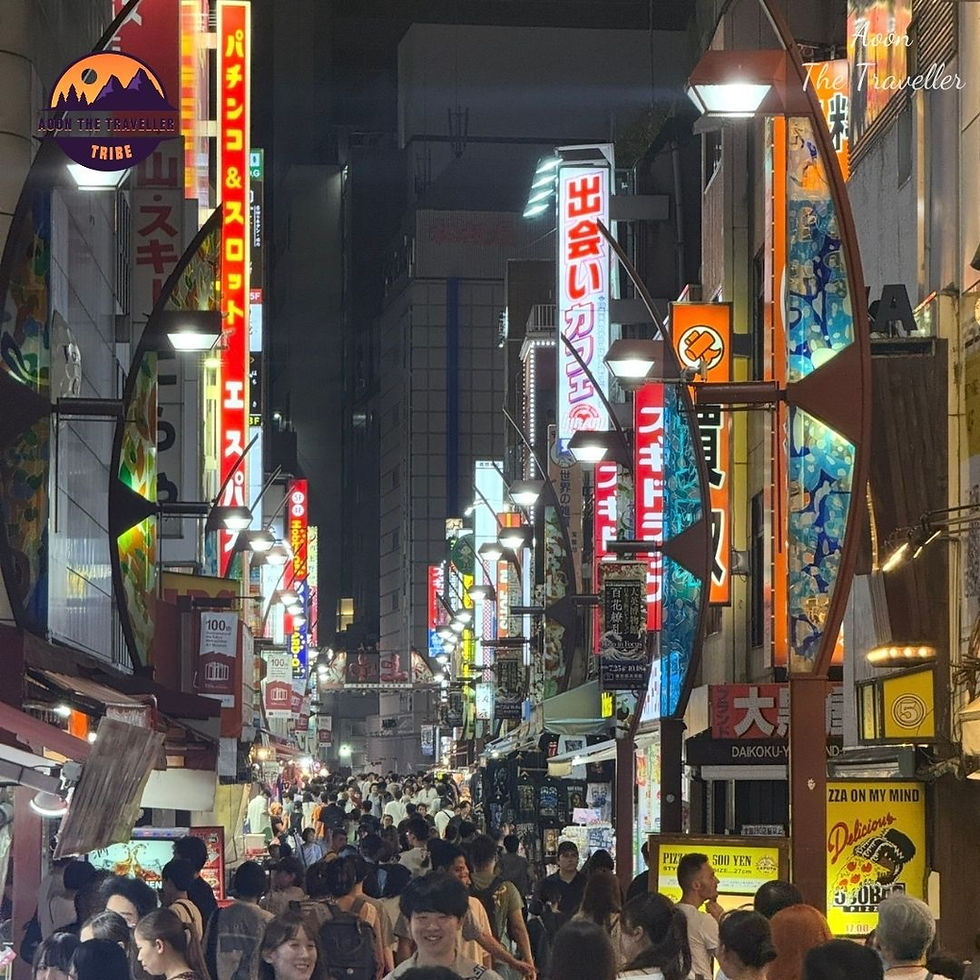
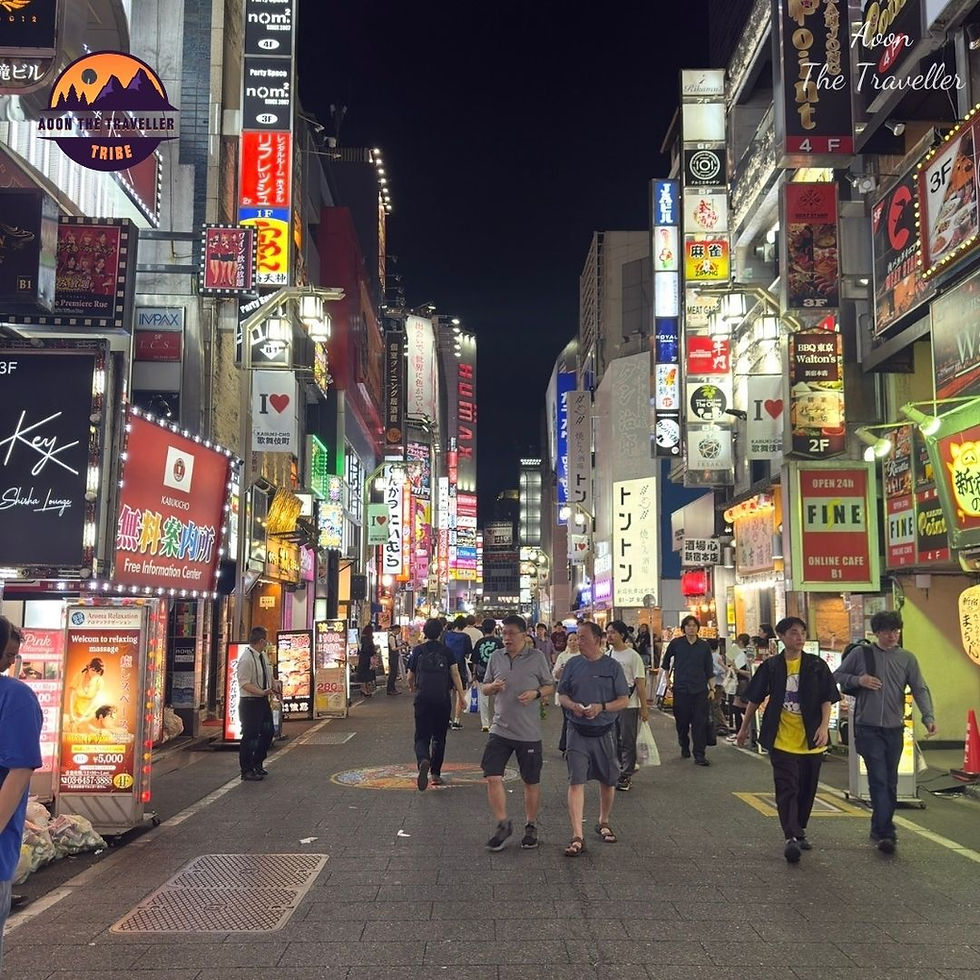
The streets of Kabukicho get very vibrant, especially after sunset. The streets get very crowded, and it is lit up with bright neon signs. There are lots of restaurants, bars, and entertainment venues.

You can also see the Godzilla Head coming out from the Building.
5. Golden Gai:
You can walk to Golden Gai, which is a small area in Shinjuku. It consists of tiny, narrow lanes filled with traditional Japanese bars. You can find hundreds of these tiny bars, many of which can only accommodate around 5–6 people.

Since we don’t drink, we didn’t go inside any of the bars, but we simply walked around and enjoyed the atmosphere and vibes of this unique little area.
6. Shinjuku Cat:
You might not find this in many countries. The digital billboards in Japan are just crazy fun, and in Shinjuku, one of the digital billboards features an ad with the famous 3D Shinjuku Cat, which has become very popular.

You can see the ad running during the day and after sunset. As soon as the cat appears, you’ll see people taking out their phones and recording videos of it.
7. Omoide Yokocho:
One of these narrow alleys is filled with tiny restaurants, hanging lanterns, and traditional Japanese izakayas. The narrow streets are packed with little food stalls and restaurants, creating a very different atmosphere from the modern and busy streets of Shinjuku.

You can simply walk around, enjoy the vibes, and try Japanese food such as yakitori and ramen. We highly recommend visiting after sunset, when the lanterns are lit, and the whole area becomes even more atmospheric.
What I would also recommend is to simply go with the flow and enjoy the vibes of the streets. Walk around, explore different streets, and see what catches your attention.

There are also plenty of shops and outlets where you can stop for some shopping, grab a coffee, or simply take a break and enjoy the atmosphere of Shinjuku.
Day 7:
teamLab → Odaiba Seaside Park → Tokyo Bay Afternoon Cruise → Tokyo Tower → Azabudai Hills → Roppongi Hills
1. TeamLab:
You can start your day with your tour to TeamLab. Please note that there are two TeamLabs located in different districts of Tokyo. If you enjoy immersive art and your budget and schedule allow you, you can visit both. In our case, we have visited TeamLab Planets located in Toyosu. If you have to choose between one of these, then I would recommend TeamLab Planets as it’s more of a physical experience.

In TeamLab Planets, there are 4 different zones: Water area, Garden area, Athletic forest, and park. More of the significant is the water area, where you walk through water and interact with digital art.
As it gets very crowded during the day, I would suggest going there in the early morning. The TeamLab Planets experience takes around 1.5 - 2 hours.
2. Odaiba Seaside Park:
Odaiba Seaside Park isn’t located that far from TeamLab Planets; you can take a metro, and you will be there in 25 minutes. You can enjoy the walk with a beautiful view of Tokyo Bay, the Tokyo Skyline, and the Rainbow Bridge. It’s not a traditional beach; it’s not open for swimming.

You can also see the Odaiba Statue of Liberty, which is a replica of the Statue of Liberty. You can also visit Odaiba Shopping malls such as DECKS Tokyo Beach, AQUA CITY ODAIBA, or DiverCity Tokyo Plaza and do some window shopping and check out some restaurants.
DiverCity Tokyo Plaza also has a life-size Unicorn Gundam statue.
3. Tokyo Bay afternoon Cruise in Tokyo:
You can also enjoy the Tokyo Bay Cruise by the Symphony starting from Hinode Pier. The Pier isn’t that far from Odaiba Seaside Park. The boat has different decks - indoor and outdoor.
Based on your seat number, you sit on your deck and enjoy the view of Tokyo Bay, Rainbow Bridge, Tokyo Tower, and Odaiba.

During the cruise, we can go to the upper deck. You can also enjoy drinks and meals on board. The cruise is for 50 minutes, and it’s recommended to arrive 30 minutes before departure.

In our case, we bought the ticket from Klook. You can book a cruise with coffee or cake. It’s highly suggested to book the ticket in advance; it’s not possible to get the tickets on the spot.
You can also book an evening cruise if you want to enjoy the view of Tokyo when it lights up.
4. Tokyo Tower:
You can take the Metro or an Uber from Hinode to Tokyo Tower. It takes around 30 minutes by Metro or 10 minutes by Uber. We recommend booking your Tokyo Tower ticket in advance.

Tokyo Tower is one of Tokyo’s most iconic landmarks, offering great panoramic views of the city. There are different observation decks, and the best time to visit is around sunset. However, you can also visit during the day. If the weather is clear, you may even be able to see Mount Fuji.

You’ll need around 1–1.5 hours to explore Tokyo Tower.
Tokyo Tower also offers different VR experiences. If you’re interested, you can try one of the VR experiences during your visit.
5. Azabudai Hills :
It’s a complex of outdoor space where you can enjoy the modern architecture and relax a bit. You can also enjoy the food as there are bakeries, cafés, and specialty shops.

6. Roppongi Hills:
You can enjoy the panoramic views of Tokyo city from several spots at Roppongi Hills. There are seats where you can just sit and enjoy the view. You can also enjoy the shopping at Roppongi Hills. There’s also a giant spider sculpture where you can click your photo.

You can also visit Mori Garden if you have time. The Team Lab Borderless is located in this district; if you aren’t able to visit other Team Lab, then we would recommend visiting this.
You can also walk around Keyakizaka Street, which is famous for shops, restaurants, and seasonal illuminations.
Best day trips from Tokyo:
Tokyo is also a great base for exploring nearby destinations. During our trip, we visited:
Tokyo DisneySea & Disneyland: As we are huge Disney fans, we spent three days experiencing different themes and rides at the Disney parks. But you can also do a day trip to Tokyo Disneyland and DisneySea.
Kamakura: We spent a nice, relaxing day exploring the coastal area and enjoyed riding the Enoden train.
Yokohama: We also enjoyed the waterfront and traditional Chinatown in Yokohama. If you are short on time, you can also spend half a day here.
Mount Fuji & Lake Kawaguchi: This is our favourite day trip. We visited Iyashi-no-Sato Nenba, Lake Kawaguchi, Oishi Park, Oshino Hakkai, Chureito Pagoda and Arakurayama Sengen Park all in one day.
Fuji-Q Highland: If you are a fan of amusement parks and thrilling rides, you should also plan a day trip to Fuji-Q Highland, which is known for its thrilling roller coasters and amazing views of Mount Fuji.


Comments